The week is over, but “where did it all go?” is still on your mind. Instead of reconstructing a month of receipts, start with the last seven days. The aim is to notice one useful pattern and make one decision you can act on.
Start with the facts
Open the week’s transactions and compare them with the accounts you used. Add any cash purchases you missed. A transfer between your own accounts is not new income or spending: the money changed location, not ownership. Handle refunds consistently too, so a returned purchase does not leave a category looking more expensive than it was.
You do not need the perfect category system. For this review, distinguish regular bills, everyday purchases and one-off events. If a payment is still pending, make a note and check it later.
Ask four questions
- What did you expect? Rent and groceries are not mistakes just because they are large.
- What happened only once? A bicycle repair and the usual commute tell different stories.
- What was worth paying for? A usable budget leaves room for these expenses too.
- What kept happening unnoticed? That may suggest a small adjustment, such as choosing your takeaway nights in advance.
Compare similar weeks. A holiday, move or celebration deserves a note rather than becoming your new everyday baseline.
Look at the difference
Our illustrative week has a $300 plan and $270 of actual spending. The difference is $30. That is not automatically available to spend: check pending charges and upcoming commitments first.
One week, planned and actual
Amounts in US dollars
Two amounts for the same period. A negative difference means spending exceeded the plan.
An illustrative example. Your changes stay on this page and are not saved.
Open calculatorMove actual spending above the plan. The difference turns negative, which is a prompt to investigate, not a score for your habits. This example compares two amounts over one period; it does not forecast next month.
Choose one action
Make it concrete: check the shopping list before Wednesday’s order, add an annual bill to the plan, or adjust an unrealistic transport limit. Next week, you can ask whether that action helped.
On a difficult week, simply reconciling the records is enough. You do not have to respond to every difference by removing every enjoyable purchase. If essential bills are at risk, start by reviewing their amounts and due dates.
Try the review in Finik
On iPhone, you can add an expense after a purchase. On Mac, you can review transactions and analytics on a larger screen. Consistency matters most: record similar purchases in a similar way so that weekly comparisons make sense.
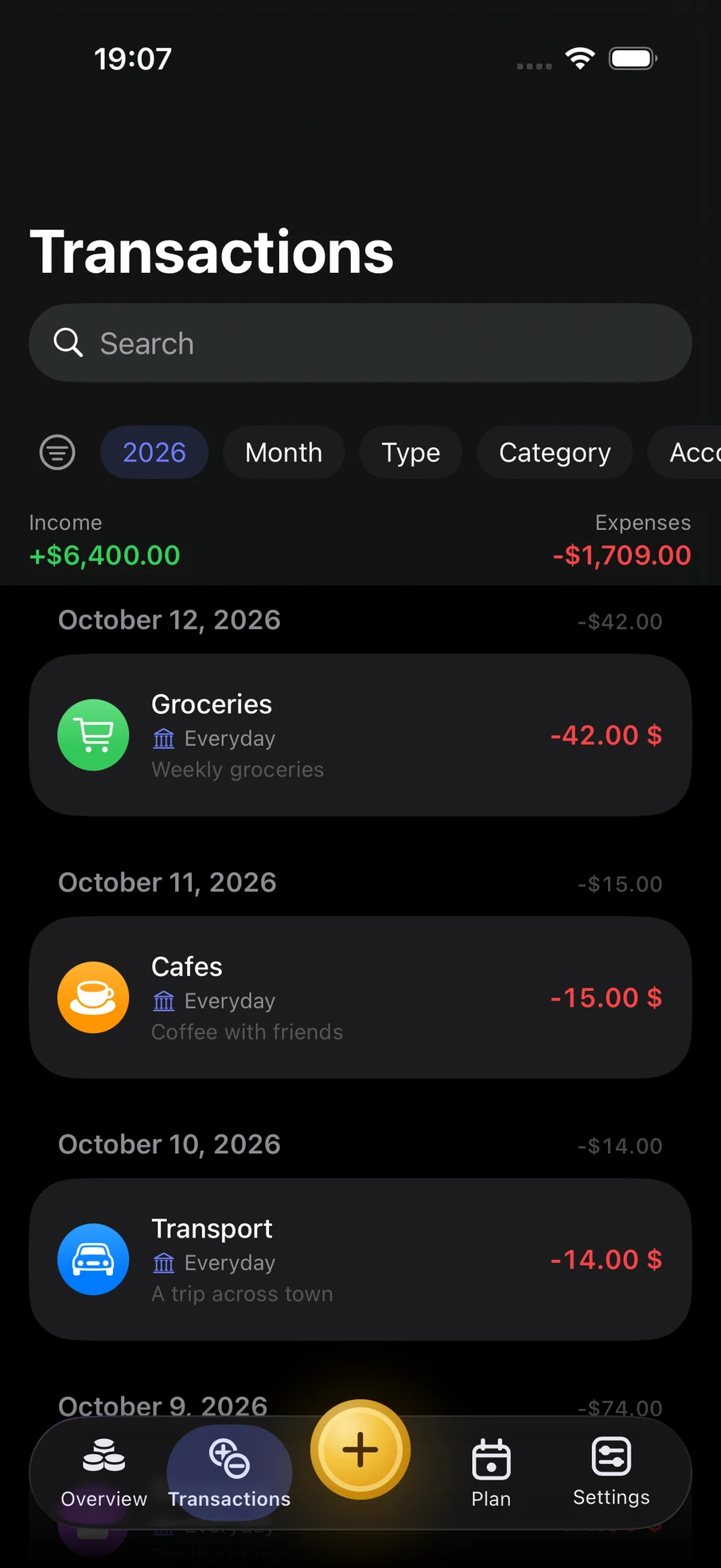
Keep three lines for next Sunday: what you noticed, what you decided and what needs another check. After a month, you will have a record of decisions as well as totals.
Background reading
Consumer.gov: Making a Budget describes recording expenses and revisiting a plan. The weekly review and amounts here are our own illustrative example, not spending targets for everyone.